Las series de cómics están de moda.
Flash es la identidad de varios superhéroes del Universo DC.
El primero en usarla fue Jay Garrick, considerado el Flash original, y el Flash de la edad de oro.
Creado por Gardner Fox y Harry Lampert, apareció por primera vez en Flash Comics durante el mes de enero de 1940.
Ganó sus habilidades por la inhalación de vapores radiactivos.
La segunda encarnación de Flash, Barry Allen, es considerado como el primer héroe de la Edad de Plata de los cómics y fue presentado en octubre de 1956.
Aunque Grant Gustin interpreta a Flash en la serie, no repetirá el rol en la película que han anunciado que harán de Flash en 2018.
El nombre real de Prisma, Roy G.
Cuando el Dr. Wells visita su oficina -escondida- en STAR Labs, un titular de prensa del futuro se muestra repetidamente que dice que Flash desapareció durante una crisis.
Eobard Thawne (Professor Zoom) es el alter ego y enemigo de Barry Allen, también conocido como Reverse Flash.
John Wesley Shipp as the titular protagonist of the television series The Flash.
The Flash was a live action television series on CBS that starred John Wesley Shipp and Amanda Pays.
The Flash featured in the series was an amalgamation of the silver-age Flash, Barry Allen, and the modern-age Wally West.
The only resemblances between the TV Barry Allen Flash and the comic book Barry Allen Flash were his name, his profession as a forensic scientist, and his love interest Iris (who was very short lived as a love interest in the television series).
Most of the elements in the television show were taken directly from the main story line in the first Wally West Flash comic books: The S.T.A.R.
The Flash's most famous villain in the series was the Trickster, played by Mark Hamill, who later went on to voice the Joker in Batman: The Animated Series and, later, the Trickster in Justice League Unlimited.
Captain Cold, played by Michael Champion, and Mirror Master, played by David Cassidy, also appeared in their own episodes.
The complete series was released as a DVD set by Warner Bros.
The Flash TV Special #1 comic introduced a variation on Kid Flash.
This particular version of the character was a teenage thief named Vince Everett.
Unlike the Flash, his powers did not require eating to replenish.
The Flash (Barry Allen) was in a CBS live-action Pilot called Justice League of America, portrayed by Kenny Johnston.
The pilot did not air in the United States.
Similar to The Flash TV series, this Flash appeared to be Barry Allen in name only, as he reflected Wally's age, ravenous appetite, and personality.
The Flash made guest appearances in the television series Smallville, in the fourth-season episode "Run" (first aired October 20, 2004) and in the sixth season in the episode "Justice" (first aired on January 18, 2007).
He is played by Kyle Gallner.
He is portrayed as a self-centered teenager who uses his powers for personal gain.
Goes by the name Bart Allen, but he is shown to be carrying multiple ID cards also identifying him as Jay Garrick, Barry Allen, and Wally West.
His speed is depicted as being well in excess of that of Clark.
Their mutual respect made it apparent that they had become friends towards the end (as Superman and Flash are good friends in the future), with allusions being made to forming a "league" one day.
It is mentioned that he got his powers through an accident, rather than genetics as in the actual comics, although at least one of the Flashes has gotten his powers through an accident.
Although commercials for "Run" billed him as "the Flash", he is never called by this name in the episode.
Instead, in "Justice", he has been given the codename "Impulse".
Like in the comics, Bart did not pick this name himself.
In his second appearance, Bart has matured somewhat, but he maintained roughly the same personality.
However, he is now using his powers to help others.
Kyle Gallner reprises his role as Impulse for a final time in the season eight finale, "Doomsday".
The character's presence continues to be felt thereafter, though he does not directly feature.
For example, in the ninth season episode "Absolute Justice", the Golden Age Flash, Jay Garrick, is seen in flashbacks, getting arrested with the other Justice Society members.
Impulse appeared in two additional episodes; a still frame of Kyle Gallner from earlier seasons was used to give the appearance that Bart was attending a Justice League meeting via videoscreen in the season 9 finale, "Salvation".
The character is also present in the season 10 episode "Icarus" at the funeral of Carter Hall, but his face is not shown.
In the series' penultimate episode, villains are assembled and are each given a hero to kill in which Bart is given to Captain Cold.
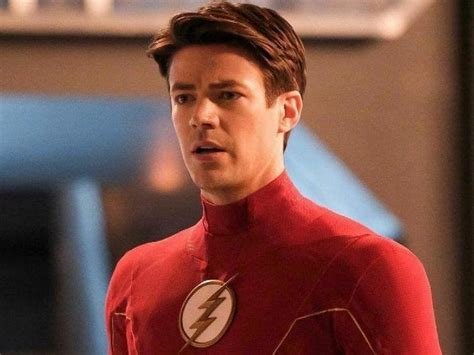
On July 30, 2013, it was announced that Arrow co-creators Greg Berlanti and Andrew Kreisberg, Arrow pilot director David Nutter and Geoff Johns, will develop a Flash TV series for The CW.
In November 2013, it was announced that the third appearance of the Flash on Arrow would no longer be a backdoor pilot, with the studio opting to make a traditional pilot instead.
By doing so, it allows the creative team to flesh out the Flash's story and his world on a bigger budget, opposed to being constrained to incorporating Arrow characters with a backdoor pilot.
The decision was made after CW executives saw material from the Flash's first two episodes on Arrow, which was very well received.
It is unclear if the Flash will still make an appearance in the previously intended third episode on Arrow.
The pilot will be written by Berlanti, Kreisberg and Johns, directed by Nutter, and executive produced by Berlanti, Kreisberg, Nutter and Melissa Kellner Berman.
Warner Bros. hired comic book writer Jeph Loeb to write a screenplay in the late-1980s, but the outing never materialized.[6]
Development for a film adaptation was revived after the studio was impressed with David S. Goyer's script for Batman Begins, and he was offered his choosing of a Flash or Green Lantern film adaptation.[7]
In December 2004 it was announced that David S. Goyer would be writing, producing and directing The Flash.[8]
He approached his Blade: Trinity co-star Ryan Reynolds for the Barry Allen role,[7] with the intention of also using Wally West as a supporting character.[9]
Goyer's script, which he tonally compared to Sam Raimi's work on the Spider-Man trilogy,[7] was influenced by seminal comic book runs by Mike Baron, Mark Waid, and Geoff Johns.
With the financial success of Night at the Museum, Warner Bros. hired Shawn Levy to direct The Flash in February 2007.
Levy would oversee the writing of a new draft, using elements of Goyer's script.[10]
Levy instead went to work on Night at the Museum: Battle of the Smithsonian, and was replaced by David Dobkin in October 2007.
Dobkin developed The Flash as a spin-off of Justice League Mortal, focusing on the Wally West character.[11]
Craig Wright was hired to write the script,[12] and, after the collapse of Justice League Mortal, Warner Bros. placed The Flash for a 2008 release date.[13]
The project became delayed by the 2007-2008 Writers Guild of America strike.[14]
Warner Bros. then hired Charles Roven to produce The Flash, with comic book writer Geoff Johns serving as a consult and co-writer.
In September 2009 Warner Bros.
In October 2009, Charles Roven was asked of the future of the Flash.
In the interview, Roven explained that he was involved but that he was removed from the project because The Flash was speeding in the direction Warner Brothers had in mind, leaving the possible film in uncertainty.
The day after Dan Mazeau responded to the article by saying “Just to chime in on your latest article: The Flash has not been hobbled.
Everything is moving forward as planned… I’m still writing the script.
Geoff Johns is still consulting.
In late February 2010 it was reported that the leading contender to helm The Flash is Greg Berlanti.
Warner Bros.
The Flash appears in the 2014 animated film, The Lego Movie.
This film marks the character's first theatrical appearance with a non-speaking cameo.
Batman v. Wally West, as Kid Flash, appears in two segments starring the Flash (Barry Allen); they are titled "Take a Giant Step" and "To Catch a Blue Bolt"; the latter shows Barry and Wally changing into their Flash and Kid Flash uniforms using their rings.
Wally's appearance differs from his comic book counterpart.
The Flash appeared in Superman: The Animated Series, voiced by Charlie Schlatter, in the second-season episode "Speed Demons".
As in the traditional comic book storylines, the Flash and Superman race to find out who is faster, but the Weather Wizard gets in the way, which causes the two to work together.
The Flash in the Justice League animated series is voiced by Michael Rosenbaum (Lex Luthor on the Television series Smallville).
This Flash is eventually identified as Wally West; however, he is an amalgamation of Barry Allen and Wally West (in Justice League Unlimited, Wally is a forensic scientist, which was Barry's profession.
The importance of the Flash as the "heart" of the Justice League was shown in the episode "A Better World", when his death in an alternate timeline triggered a series of events which turned that alternate League (the "Justice Lords") into virtual dictators of Earth.
He has also proven key in saving the day in a few episodes, such as "Divided We Fall", in which he defeated the fused Brainiac/Lex Luthor when all the other six founding Justice League members could not.
In the process, he was drawn into the Speed Force (the first explicit use of the concept in the DCAU), and barely managed to escape.
The episode "Flash and Substance" is centered on the opening of the Flash Museum on "Flash Appreciation Day" in Central City, and featured many of the Flash's rogues in cameos, while focusing on Captain Boomerang, Mirror Master, Captain Cold, and The Trickster (voiced by Mark Hamill).
Linda Park also appears as a reporter covering the museum opening.
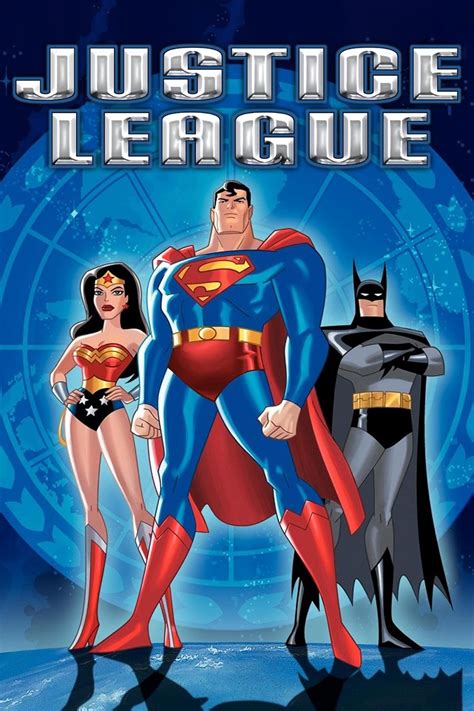
Wally West is the Flash featured as one of the seven founding members of the Justice League, in both the Justice League and Justice League Unlimited animated series.
His personality is more or less the same as it was from his appearance on Superman: The Animated Series, and his flippant attitude is often used to provide comic relief from the often intense nature of his fellow Leaguers, though he is the featured hero in several episodes.
However, in one episode of Justice League Unlimited, he complains to Elongated Man that he dislikes being viewed as the "teenage sidekick" even though he was part of the original seven.
His super fast metabolism, which results in him eating absurdly and inhumanly large portions of food, was something of a running gag on the series.
Even in the episode "The Great Brain Robbery" Lex Luthor after possessing Flash's body defeats Justice League members and before running eats some food.
Barry Allen elements of the JL/JLU animated Flash: he's the only existing Flash in the series, he was never Kid Flash (although in the episode "Flash and Substance", a Kid Flash costume is briefly seen on display in the Flash museum).
He lives in Central City, Barry Allen's hometown as opposed to Keystone City, Wally West's hometown.
He is a police scientist, which was Barry Allen's job in the comics.
His origin is also that of Barry Allen's.
This Flash also fought some of Barry Allen's enemies throughout the series, such as Captain Cold, Mirror Master, Captain Boomerang, Gorilla Grodd, and The Trickster.
Wally West elements of the JL/JLU animated Flash: he has red hair and green eyes like Wally does in the comics.
This Flash also has Wally's girl-crazed, occasionally big-headed manner, paired with a childlike attitude and intelligence.
Despite his personality opposing the no-nonsense disposition of his fellow Leaguer, John Stewart (the Green Lantern), the two are shown to be very close friends.
Wally also shows a strong friendship with Shayera Hall that is touched on several times through both the JL and JLU series, usually in a sisterly way, including him being the first to hug her after her decision to resign.
In Justice League Unlimited third season's debut episode "I Am Legion", Flash says, "She loves me.
She's like the big sister I never had.
Only, you know...
Wally appears without the Flash costume twice in the series.
The first time is in the "Starcrossed" episodes when the Justice League decides to remove their costumes and move around as ordinary people to hide and regroup.
The Flash appears reluctant to trust his fellow Justice League members with his secret identity, whereupon Batman shows he already knows by revealing his identity saying, "Wally West" while pointing at the Flash, followed up by revealing the secret identity of Superman (Clark Kent) and himself (Bruce Wayne).
Wally then removes his mask and Wonder Woman tells him that she likes his red hair just before ruffling it.
The second time is in the episode "Flash and Substance", where Wally is shown to be working at the forensics lab before taking a half day off to attend the Flash museum opening.
Wally's face is also exposed in one other episode, "The Great Brain Robbery".
The Flash appeared at the end of The Batman's fourth season finale "The Joining" as one of the members of the Justice League.
The Flash was properly introduced in the episode "A Mirror Darkly" to help Batman battle Mirror Master.
Also Charlie Schlatter reprised the role of Flash from the above Superman episode "Speed Demons".
Creators stated that their version was intended to be Barry Allen, but they'd leave it up to the viewers to decide for themselves.
Kid Flash debuts in the episode of the Teen Titans animated series entitled "Lightspeed".
While the character's true identity is never given, the fact that Michael Rosenbaum voices the character implies that he is intended to be Wally West as Rosenbaum also voices an older Flash/Wally West in Justice League.
In the series, he is portrayed similar to the way that Wally was portrayed in comic books.
His personality is often considered "laid back", and he is known to be comedic and sometimes flirtatious.
When the Titans are searching for the Brotherhood of Evil and the Titans East have gone back home to Steel City, Kid Flash decides to help protect Jump City and stop crimes from being committed.
When he interferes with the H.I.V.E. Five's criminal deeds, he flirts with their leader, Jinx, and tries to make her reevaluate her life of crime.
Shortly afterwards the H.I.V.E Five attempts to capture him and, after Madame Rouge tires him out, Jinx traps him in an electric field.
Jinx nearly hands him over to Madame Rouge, but she frees him when she realizes Madame Rouge doesn't appreciate her help and that Kid Flash was the one who truly cared for her well-being.
Afterwards, Jinx quits the H.I.V.E.
He briefly appears in a shot of all the Titans in "Calling All Titans", where it is revealed the Titans have come in contact with him and he has a Titan communicator.
(Presumably, this is why he decided to go to Jump City in the first place, though this is never confirmed on-screen.)
In "Titans Together", he brings Jinx to the Brotherhood's lair as his ally and helps the speedsters Más y Menos and the other Titans freeze the Brotherhood's member villains inside cryogenic cases.
Kid Flash is one of the few Titans in the animated series to fully resemble his comic counterpart.
However, Wally's eyes in the comics are currently green.
Kid Flash is mentioned in issue #28 of Teen Titans Go!, and makes cameo appearances in several other issues.
He is featured in a worldwide race against Más y Menos...
The Flash 1x01| Barry trabaja como forense | (Español Latino)
El personaje de Cisco Ramon a menudo usa camisetas alusivas a The Big Bang Theory.
Ferris Air ha aparecido en varios episodios de Arrow y en el piloto de The Flash.
Barry Allen fue uno de los seudónimos utilizados por Frank Abignale (Leonardo Dicaprio) en la película Atrápame si puedes, lo que le llevó a ser finalmente capturado.
A partir de este episodio, "Flash vs.
El más ecológico de los superhéroes, el Capitán Planeta, podría aparecer pronto en la gran pantalla para intentar salvar a la Tierra una vez más, o al menos llamar la atención sobre el tema del calentamiento global.
Como quizás recuerdes, el personaje apareció por primera vez en una serie animada a principios de los 90, cuando el tema apenas empezaba a tomar verdadera relevancia mundial.
El Capitán, junto a 5 chicos de diferentes partes del mundo con diferentes poderes, luchaban contra elementos que intentaban destruir el planeta.
Según varios medios, el live action presentará a un Capitán Planeta diferente.
La historia ocurrirá tiempo después de las acciones que vimos en la serie (podría ser en la actualidad).
Se dice que esta vez el Capitán Planeta necesita de la ayuda de los planetarios, en vez de ser una especie de jefe o líder.
Glen Powell (Scream Queens) estará a cargo del protagónico de piel azul y cabello verde, mientras que Jono Matt (Doctor Dolittle) estará a cargo del guión.
En el pasado, Sony hizo un intento de llevar al personaje al cine, pero nunca llegó a materializarse.
Ahora Paramount ha obtenido los derechos y todo parece ir en la dirección correcta.
La compañía productora establecida por el actor Leonardo DiCaprio, Appian Way, colaborará con Paramount en el proyecto.
Leonardo se ha convertido en una de las voces de Hollywood más escuchadas en materia de ecología, por lo que este proyecto le viene como anillo al dedo.
Como bien dijo en su discurso en la ONU hace un par de años, “Yo trabajo como actor.
A menudo hago personajes ficticios que resuelven problemas ficticios.
Y creo que la especie humana ve los problemas climáticos en la misma forma, como si fuera ficción, como si los cambios climáticos no fueran reales o fueran a desaparecer por sí solos.
Pero creo que ahora estamos mejor informados.”
Por el momento, el actor está haciendo lo que está a su alcance: hacer películas que abordan la temática.
Después de todo, salvar al planeta, o mejor dicho, salvarnos a nosotros mismos, requiere la participación de todos de una forma u otra.
Combinemos nuestros poderes: Tierra, viento, fuego, agua y sobre todo pongamos nuestro corazón si queremos dejarle una casa a nuestros descendientes.